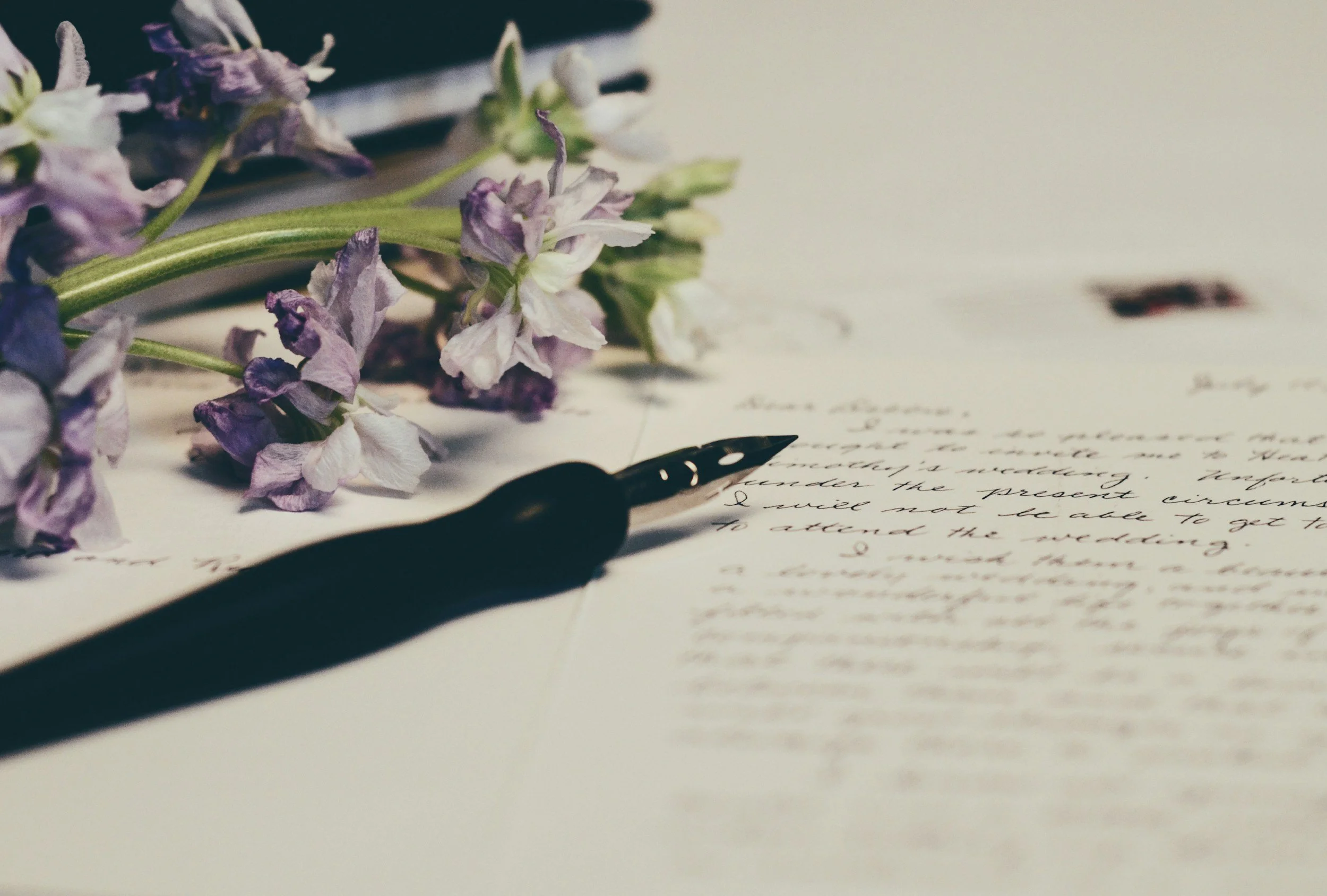
haiku
noun
: an unrhymed verse form of Japanese origin having in English three lines containing usually five, seven, and five syllables respectively
From Merriam-Webster Dictionary
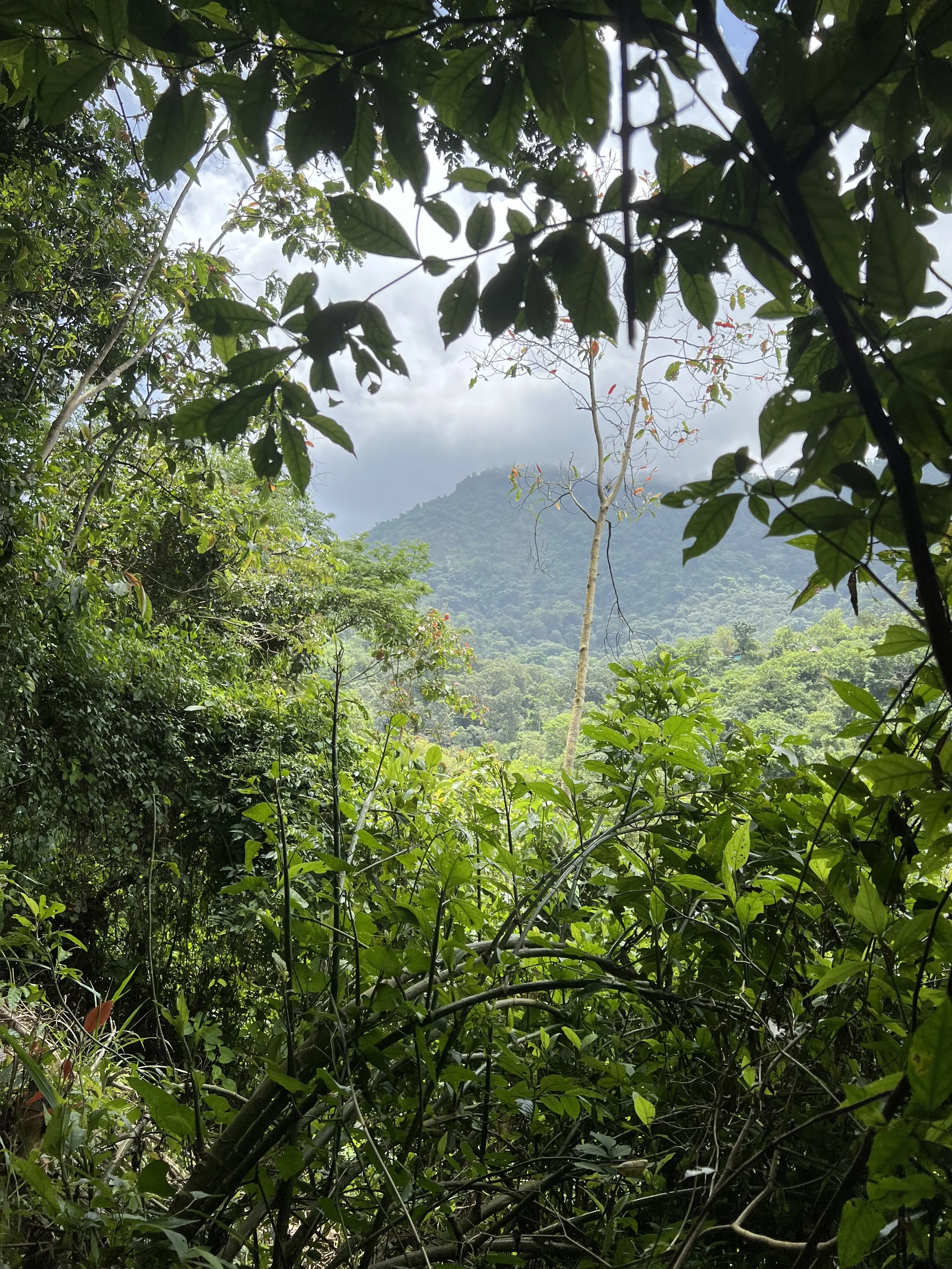
Each of my framed and signed photography prints comes with a haiku.
View here.
Why haiku?
Haikus have many benefits:
From reading to writing, they offer a sense of peace, tranquility, and a chance to connect with nature and the present moment by mindfully observing what is around us and putting it into the written form. Like a puzzle or small game, the short and simple 5-7-5 syllable format gives our minds an easy creative workout all while appreciating the natural beauty and present moment that surrounds us. Writing haikus also give us an opportunity to practice gratitude, mindfulness, and immerse ourselves in nature (see: forest bathing and biophilia) which can feel great after a busy day and deepen our sense of appreciation for the world around us.
Try writing a haiku today:
Take a look at something around you. It doesn’t have to be nature, but traditionally haikus are about nature (which is a great reason to take a walk, get into nature, forest bathe, practice gratitude, practice mindfulness, or even just observe something natural immediately around you). It could be the sun, your coffee, your dog, a vase of flowers, your hand, the sky, a tree branch… Whatever it is, pick your subject. Don’t stress too much — you can always try again if you don’t like it, and this is an exercise just for your own fun, relaxation, and an opportunity to embrace the present moment.
Now that you have your subject picked, what thoughts come into your mind? Don’t think too hard — just let whatever comes flow to you, no matter if it sounds silly or too basic (you can always make adjustments later if you like). If you’re stuck, use your 5 senses (sight, hearing, smell, taste, touch) to stir up some ideas; or alternatively, some prompts to generate ideas include: What color(s) do you see? Is there movement, and if so, is it fast/slow or resemble anything (swaying, dancing, etc)? What shape(s) do you see? What sounds do you hear? Which emotions does it make you feel?
Take your first thought and try to put it into 5 syllables (an easy way to think about a syllable is when your jaw drops down when saying a word — for example: the word “example” - you can feel your chin drop 3 times when saying this word, so it has 3 syllables).
For instance, let’s say your subject is the sky and your first thought was how blue it is. Your goal is to create 5 syllables about this, so you could say something as simple as “how blue the sky is” or something more creative such as “like a giant lake” — there is no wrong or right here, just whatever you feel. You are the author of your thoughts and your own unique poetry.
Now, you will need to create a second line of 7 syllables, so let another thought about the subject float through your mind, and put it into 7 syllables. For example, if you notice a lot of clouds, you could say something as simple as “with so many puffy clouds” or something more creative like “floating beneath cotton balls”.
Lastly— your 5 syllable line that closes the poem. Like the first two lines, let a thought about the subject enter your mind and frame it into 5 syllables. Using the sky as our example, if you think it is beautiful, you could say something like “and such great beauty” or “with such great beauty”.
Putting it all together, your haiku looks something like this:
Sky
How blue the sky is / with so many puffy clouds / and such great beauty
or
Sky
Like a giant lake / floating beneath cotton balls / with such great beauty
If the traditional 5-7-5 syllable format feels too daunting at first, try a shorter/non-traditional 3-5-3 syllable format.
Use this practice today to make your own haikus and enjoy nature!
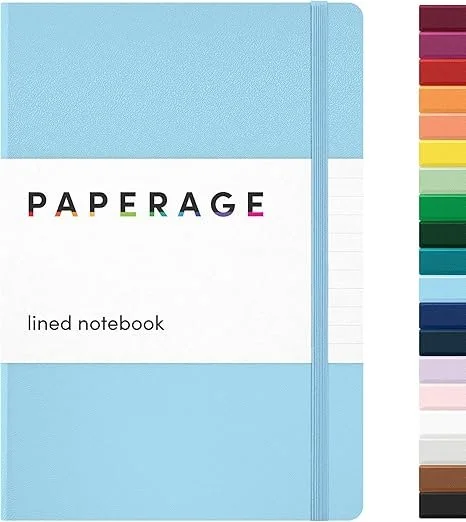
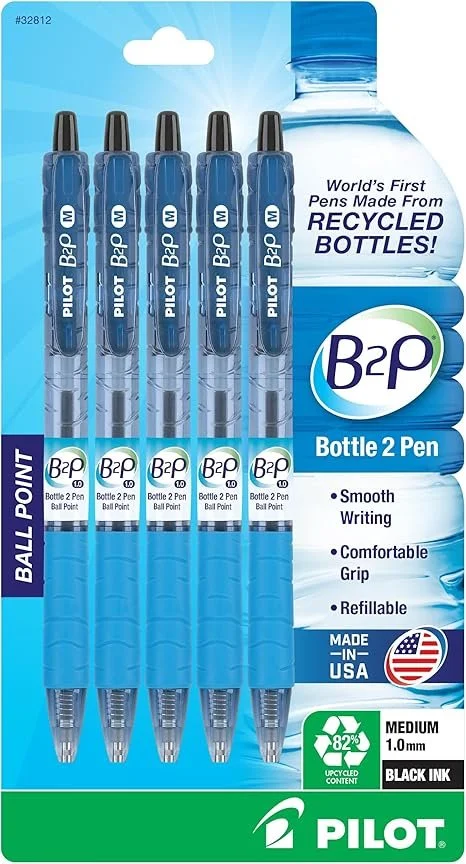
Shop notebooks and pens (retractable and fine-line).
Once you have got the basics down, you can add a little more creativity to your poems by incorporating traditional poetry elements such as the following figurative language. Try one at a time until it is second nature:
Here is how I quickly think of figurative language (these are my quick rough definitions which are not entirely accurate; for Merriam-Webster definitions, keep scrolling):
Metaphor: Saying one thing IS another to compare without using “like or as” (example: The valley is an emerald / green and shining bright).
Simile: comparing things using “like or as”(example: A smile like a ray of sun, or, she smiled as bright as the sun).
Juxtaposition: placing two things side by side to show contrast/difference (example: A tiny cottage / at the foot of the great Alps)
Onomatopoeia: words of sounds (example: BOOM! went the lightning).
Hyperbole: an exaggeration (example: Roses with stems a mile long).
Alliteration: repeating consonant sounds but only at the beginning of multiple words (example: Rain runs right over / the softly swaying sagebrush / painting a picture).
Consonance: repeating consonant sounds in the beginning, middle, or end of multiple words (example: the clock struck midnight).
Assonance: repeating vowel sounds in the beginning, middle, or end of multiple words (example: Just like a good book).
Personification: giving human qualities to non-human things (example: The branches danced in the wind).
Idiom: a saying that can’t be interpreted literally (example: As easy as pie).
Definitions from Merriam-Webster:
metaphor
noun
:a figure of speech in which a word or phrase literally denoting one kind of object or idea is used in place of another to suggest a likeness or analogy between them (as in swimming in paperwork)
I remember … my first experience of making a metaphor, and I … went inside and wrote itdown: the cracked earth is a map.—Mary Ruefle
One of my writing techniques has always been to employ metaphors to explain complex issues.—Thomas L. Friedman
broadly: figurative language
Poetry can do a lot more than just show off a savvy use of metaphor or a clever new form.—Ashley M. Jones
Note: Do not confuse metaphor with simile. Metaphor makes a comparison by equating one thing with another (as in "life is a journey"), or by creating an identification or fusion between two things (as in "burning desire"), while simile states that something is similar to another thing. Similes often use like or as (as in "fresh as dawn" or "shining like a star") but do not require it, as Shakespeare's "Shall I compare thee to a summer's day?" demonstrates.
2
: an object, activity, or idea treated as a metaphor : symbol sense 2
The author uses flight as a metaphorfor freedom.
simile
noun
:a figure of speech comparing two unlike things and often using likeoras (as in cheeks like roses)
And, in a simile borrowed from Virgil, he described his thoughts as resembling the patterns that dance across the ceiling when sunlight reflects off the surface of a water bowl.—Sarah Bakewell
Without image, metaphor, simile, it seems to me, there is no poetry.—Maxine Kumin
juxtaposition
noun
jux·ta·po·si·tion ˌjək-stə-pə-ˈzi-shən
: the act or an instance of placing two or more things side by side often to compare or contrast or to create an interesting effect
an unusual juxtaposition of colors
Thejuxtaposition of Holly's career with the content of her podcast might leave audience members scratching their heads.—Nick Kasmik
also: the state of being so placed
contrasting shapes placed in juxtaposition to each other
A five-minute ferry ride from Brooklyn and Manhattan, [Governor's Island] feels distant yet impossibly close, and the juxtaposition of vertical city and languorous landscape is almost surreal.—Justin Davidson
onomatopoeia
noun
on·o·mato·poe·ia ˌä-nə-ˌmä-tə-ˈpē-ə
-ˌma-
1
: the naming of a thing or action by a vocal imitation of the sound associated with it : the creation of words that imitate natural sounds (such as buzz, hiss)
also: a word formed by onomatopoeia
… some of our most beloved onomatopoeias: crackle, sizzle, pop, slurp.—Yotam Ottolenghi
2
: the use of words whose sound suggests the sense
a study of the poet's onomatopoeia
hyperbole
noun
hy·per·bo·le hī-ˈpər-bə-(ˌ)lē
: extravagant exaggeration (such as "mile-high ice-cream cones")
Often, referring to an athlete as an icon is an act of obvious hyperbole.—Chad Finn
… the show is famous for constantly using hyperboles like "the most shocking season" or "jaw-dropping" …—Shivani Gonzalez
alliteration
noun
al·lit·er·a·tion ə-ˌli-tə-ˈrā-shən
: the repetition of usually initial consonant sounds in two or more neighboring words or syllables (such as wild and woolly, thrifty and thriving)
called also head rhyme, initial rhyme
compare assonance
consonance
noun
con·so·nance ˈkän(t)-s(ə-)nən(t)s
1
: harmony or agreement among components
His beliefs are in consonance with the political party's views.
2
a
: correspondence or recurrence of sounds especially in words
specifically: recurrence or repetition of consonants especially at the end of stressed syllables without the similar correspondence of vowels (as in the final sounds of "stroke" and "luck")
b
c
: sympathetic vibration, resonance
assonance
noun
as·so·nance ˈa-sə-nən(t)s
1
a
: relatively close juxtaposition of similar sounds especially of vowels (as in "rise high in the bright sky")
b
: repetition of vowels without repetition of consonants (as in stony and holy) used as an alternative to rhyme in verse
2
: resemblance of sound in words or syllables compare alliteration
assonant
adjective or noun
assonantal
adjective
personification
noun
per·son·i·fi·ca·tion pər-ˌsä-nə-fə-ˈkā-shən
1
: attribution of personal qualities
especially: representation of a thing or abstraction as a person or by the human form
2
: a divinity or imaginary being representing a thing or abstraction
3
idiom
noun
id·i·om ˈi-dē-əm
pluralidioms
1
: an expression in the usage of a language that has a meaning that cannot be understood from the combined meanings of its elements (such as up in the air for "undecided") or in its grammatically atypical use of words (such as give way for "retreat")
Where there's a will, there's a way—as true as any idiom could be.—The Arkansas Democrat-Gazette
2
a
: the language peculiar to a people or to a district, community, class, or group : dialect
First, you had to translate from the American into the English or Australian idiom …—John Lahr
… does not speak the idiom of the bourgeoise.—Jennifer Wilson
Such clannishness is leading scholarly writing to … an increasingly rarefied and self-referential idiom.—Nina Auerbach
b
: the syntactical, grammatical, or structural form peculiar to a language
3
: a style or form of artistic expression that is characteristic of an individual, a period or movement, or a medium or instrument
the modern jazz idiom
For him, the impact of a work of art was bound to an artist's discovery of his own idiom and vision of the world.—Sarah Elizabeth Lewis
a new culinary idiom